
Shop by Category
CPAPmask.eu Safety Notice
CPAP Water Safety Notice
Never move, lift, tilt, shake or pack your CPAP machine while the humidifier chamber contains water. This simple rule helps prevent water damage, motor noise and possible warranty problems.
Empty First
Do Not Shake
Fill to MAX
Check Noise
Quick CPAP Water Safety Rules
Follow these simple rules every time you use a CPAP machine with a humidifier chamber.
Empty First
Always empty the humidifier chamber before moving, lifting or packing the CPAP machine.
Do Not Shake
Never shake the machine to remove water, dry it faster or check if water is inside.
Fill to MAX
Do not overfill the water chamber above the MAX line marked by the manufacturer.
Check Noise
Stop using the machine if the motor sound changes after possible water exposure.
Important warning
If water or any liquid enters the CPAP machine, the issue may be considered liquid damage, accidental damage or incorrect handling. In this case, the manufacturer warranty may not cover the repair.
The main rule is simple
Water inside means the machine stays still. If you need to move the machine, first remove the humidifier chamber, empty all water and make sure the outside of the chamber is dry before transport.
Do not do this
- Do not carry the machine with water inside.
- Do not tilt the machine after filling the chamber.
- Do not shake the machine to remove or check water.
- Do not pack the machine while wet.
Safe habit
- Turn the machine off before moving it.
- Remove the humidifier chamber first.
- Empty all remaining water.
- Move or pack only when dry.
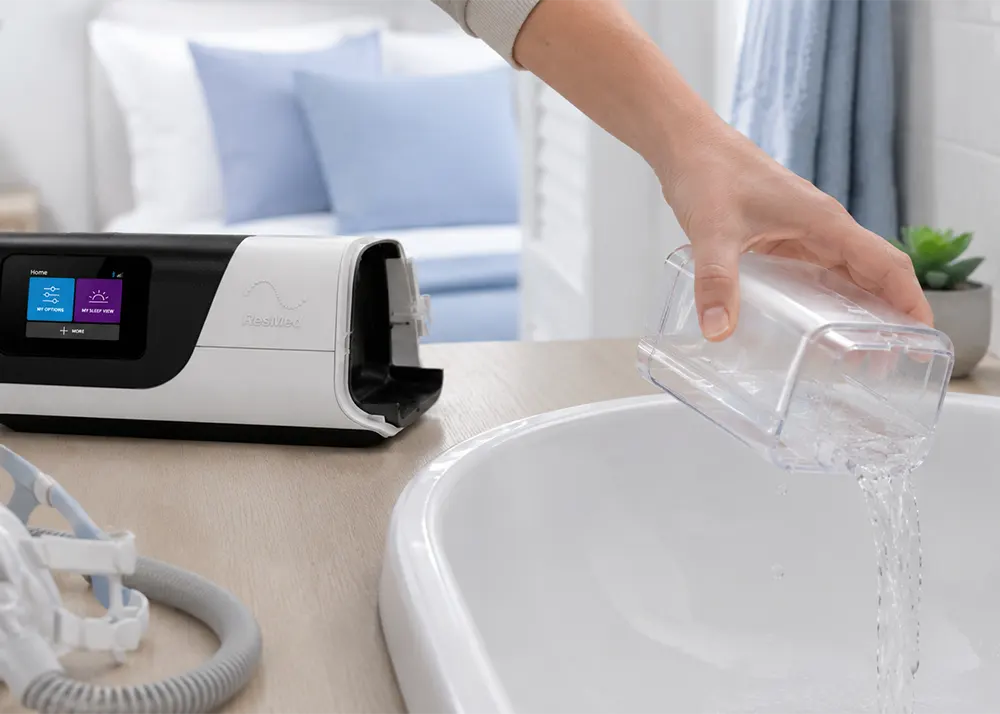
Empty water before moving
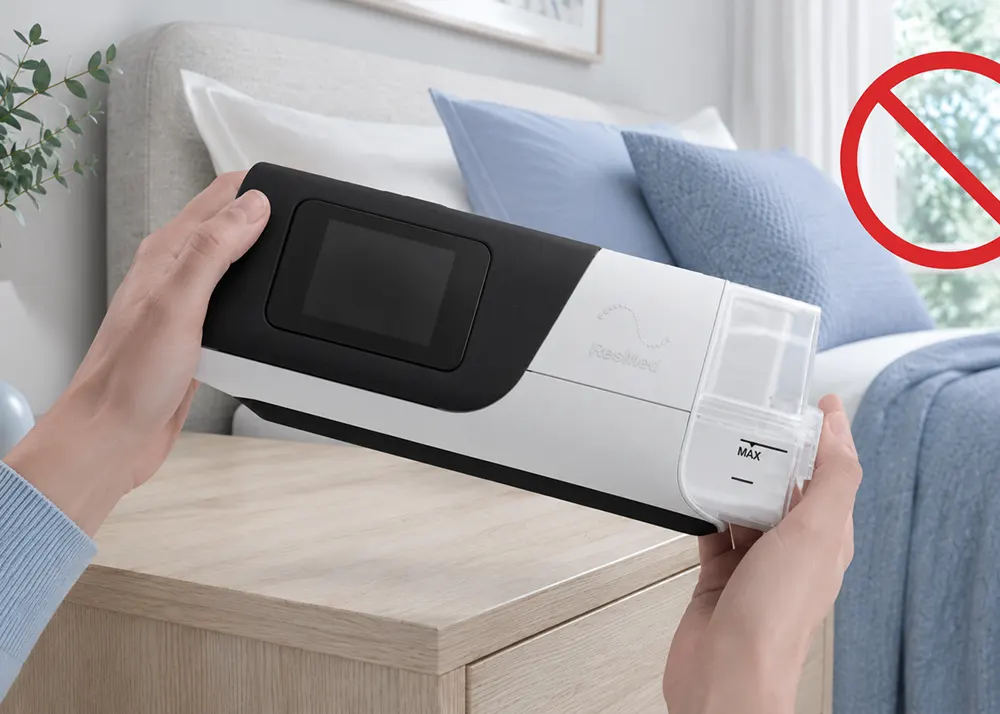
Do not shake the machine
Why water safety matters
A CPAP humidifier is designed to keep water inside the chamber. If the machine is lifted, tilted or shaken while the chamber is full, water can move toward the air outlet, tube or internal machine area.
This may cause water in the tube or mask, bubbling sounds, louder motor noise, unstable airflow, warning messages or possible internal damage.
Simple reminder
- Water inside means the machine stays still.
- Need to move it? Empty the water first.
- If the sound changes, stop using it and contact support.
Safe steps before moving your CPAP machine
Follow these steps before moving the machine, cleaning the bedside table or packing for travel.
1
Turn it off
Stop therapy and make sure the CPAP machine is no longer running.
2
Remove chamber
Take the humidifier chamber out before moving the device.
3
Empty water
Pour out all remaining water from the humidifier chamber.
4
Dry outside
Wipe the outside of the chamber if any water is visible.
5
Disconnect tube
Remove the tube if you are packing or transporting the machine.
6
Move safely
Move the machine only when the chamber is empty and the parts are dry.
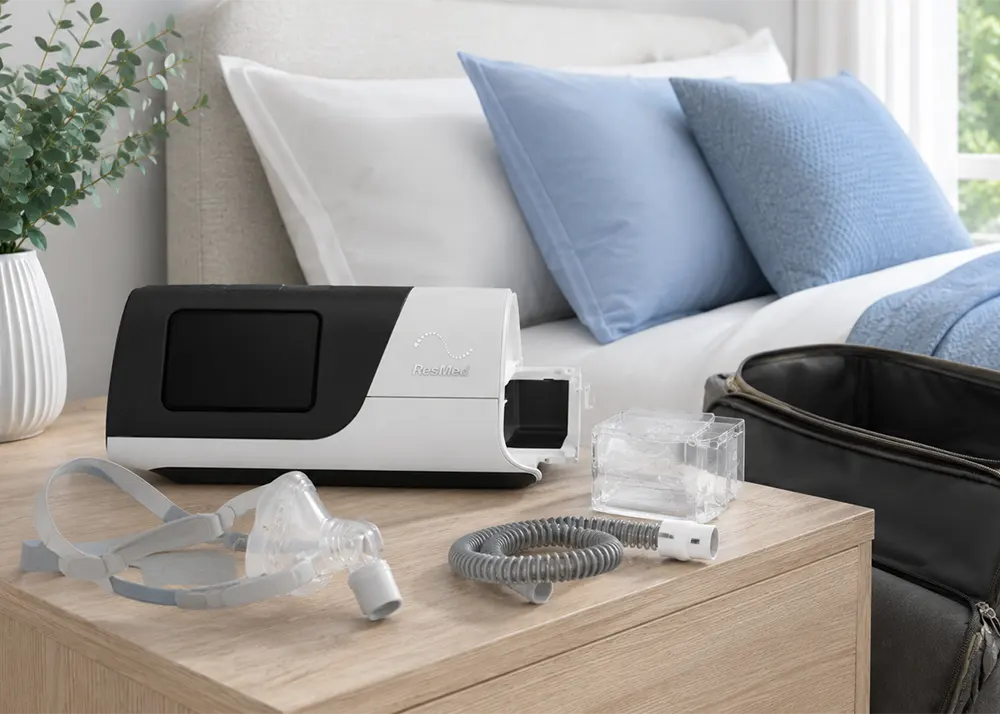
Safe moving steps
Fill only to the MAX line
Never overfill the CPAP humidifier chamber. The MAX line is there to help keep water in the correct area. Adding extra water to make it last longer increases the risk of water entering the tube or machine.
Before sleep
- Fill only up to the MAX line.
- Keep the machine flat and stable.
- Check that the chamber is closed correctly.
- Use a stable bedside table.
Avoid
- Do not add water above the MAX line.
- Do not move the machine after filling.
- Do not place the machine on an uneven surface.
- Do not leave the tube full of water.
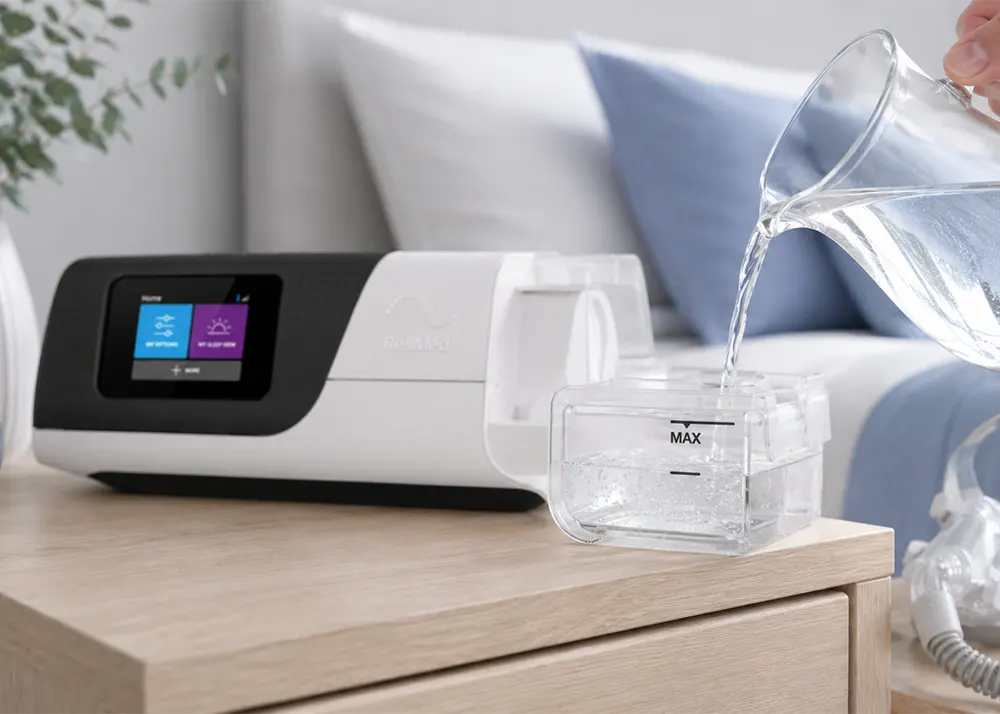
Fill only to MAX line
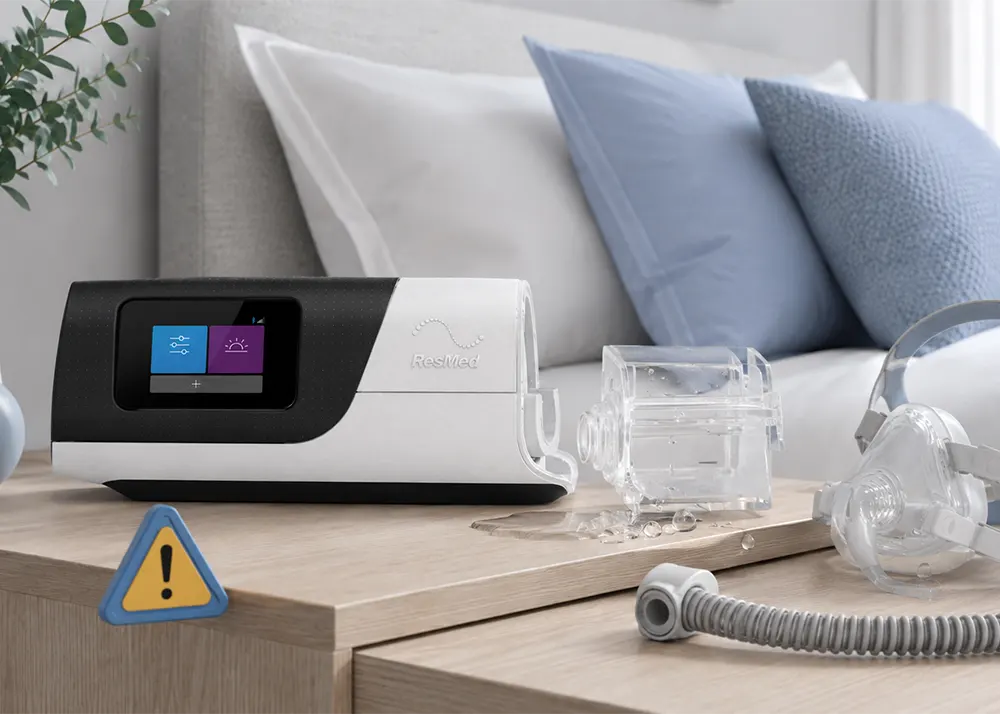
If water enters the machine
If water enters the CPAP machine
If you think water has entered your CPAP machine, stop using it. Do not shake the device, do not open it yourself and do not use a hair dryer.
What to do
- Turn the machine off immediately.
- Unplug the power supply.
- Remove the humidifier chamber.
- Remove the air tube.
- Let removable parts dry completely.
- Contact support if the sound changes.
Do not do this
- Do not shake the machine.
- Do not open the machine yourself.
- Do not use a hair dryer.
- Do not continue therapy if it sounds abnormal.
Warranty notice
- Water or liquid damage may not be covered by manufacturer warranty.
- Paid inspection or repair may be required if liquid damage is confirmed.
Rainout and water in the tube
Rainout is condensation inside the CPAP tube or mask. It usually happens when warm, humidified air meets a colder room or cold tube. Rainout is different from spilling water into the machine, but it can still create water in the tube or mask.
How to reduce rainout
- Use a heated tube if available.
- Lower the humidity setting slightly.
- Keep the room temperature stable.
- Avoid placing the tube on a cold floor.
- Use a CPAP tube cover if needed.
- Check the tube for water drops in the morning.
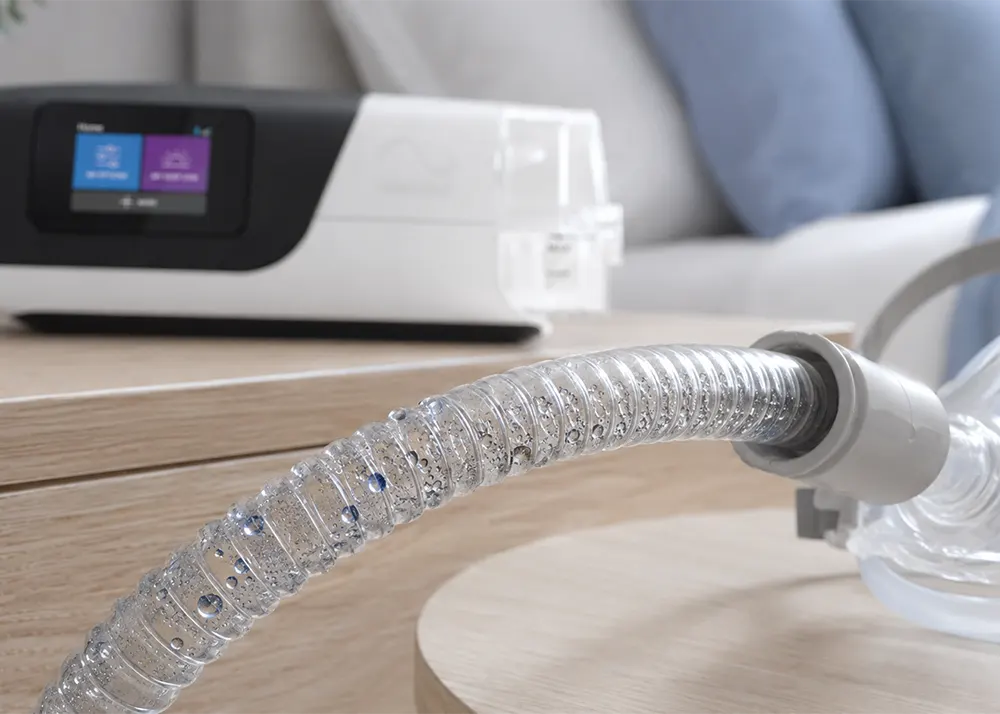
Rainout and tube water
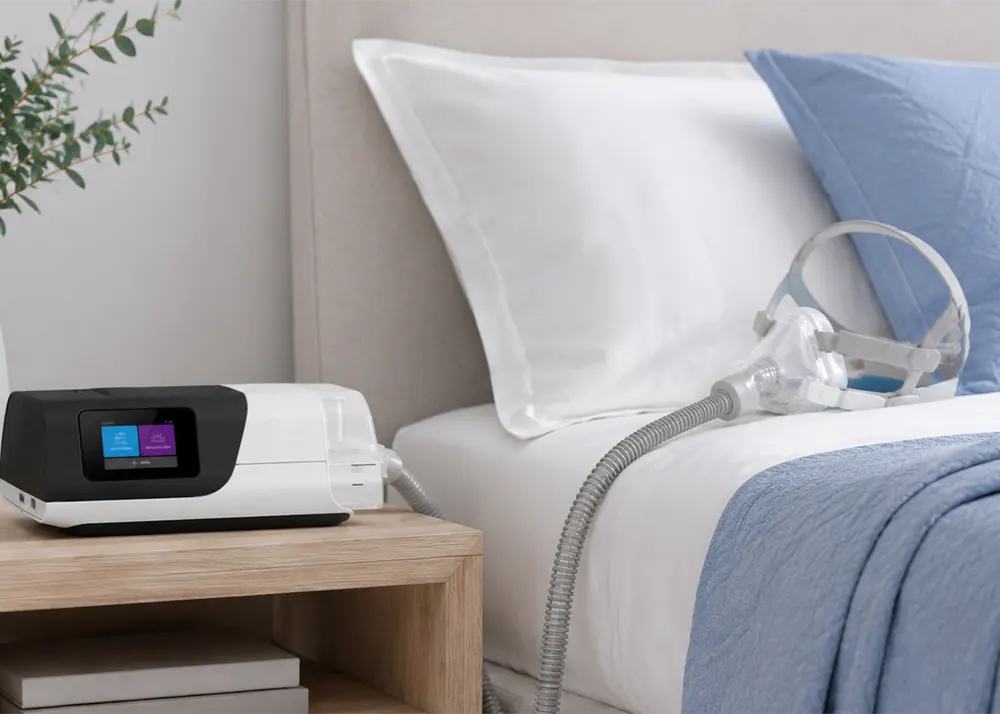
Correct machine position
Correct machine position
Place the CPAP machine on a flat, stable surface. Avoid soft, uneven or sloped surfaces because they increase the risk of water moving inside the humidifier chamber.
When possible, keep the machine lower than your mask. This helps prevent water from travelling back through the tube toward your face.
Good placement
- Use a flat, level bedside table.
- Keep the machine lower than the mask if possible.
- Make sure cables are not pulling the device.
- Check the position again after filling.
Avoid placement risks
- Do not place the machine on soft bedding.
- Do not rest the machine on its side.
- Do not place it at a strong angle.
- Do not place it where it can be pulled down.
Frequently Asked Questions
Quick answers about CPAP water damage, humidifier handling and rainout.
Can I move my CPAP machine with water inside?
No. Remove and empty the humidifier chamber before moving, lifting or packing the machine.
Can I shake the machine to remove water?
No. Do not shake the CPAP machine. If you suspect water entered the machine, stop using it and contact support.
Can water damage affect the warranty?
Yes. Water or liquid damage may be considered accidental damage or incorrect handling, and may not be covered by manufacturer warranty.
What is rainout?
Rainout is water condensation inside the CPAP tube or mask, usually caused by warm humidified air meeting a colder room or tube.
Where should I place the CPAP machine?
Use a flat, stable surface. When possible, keep the machine lower than your mask to reduce the chance of water travelling toward your face.
Need help with your CPAP machine?
If you suspect water entered your CPAP machine, or if the machine started making unusual noise after water exposure, stop using it and contact CPAPmask.eu support.